










Liberia’s government has a number it is proud of. It has earned the right to say it out loud.
On September 14, 2026, domestic revenue collected in a single year passed US$1 billion for the first time in the country’s history, the Ministry of Finance and Development Planning reports. The whole of FY2025 brought in US$847.70 million. [4]
The next budget is bigger again. The draft FY2027 national budget sets a resource envelope of US$1,538,916,274 — about US$1.539 billion, and 16.9 percent above the FY2026 approved budget. Its chosen theme is “A Growing Budget for Bigger Impact.” [4] It is a draft. The Legislature has not approved it.
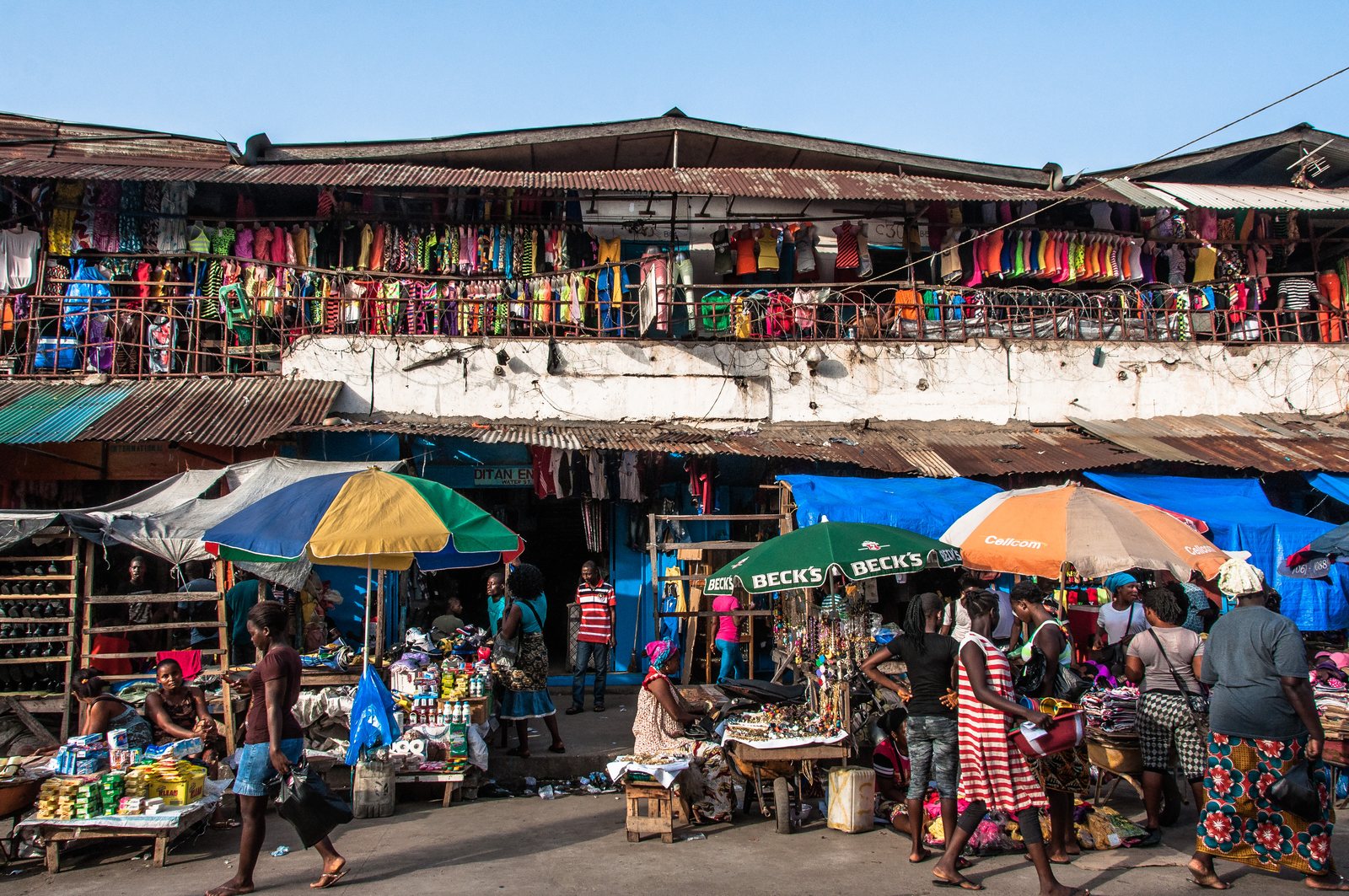
That is the paradox at the centre of President Joseph Nyuma Boakai’s economic record. The state is collecting more, spending more and owing less as a share of the economy. Yet in the markets of Monrovia and the farms of the counties, the question is not how large the budget has grown. It is what the budget has changed.
First, what Liberia is not
Critics reach for dramatic words: freefall, laissez-faire, a “dig-a-hole-and-cover-it” economy. Today’s Liberia has tested each against the record. Two of them do not survive the evidence.
Liberia is not in demonstrated macroeconomic freefall. The World Bank reports that the economy grew by 5.1 percent in 2025, that the overall fiscal deficit narrowed to 2.1 percent of GDP from 2.5 percent, that public debt eased from 56.4 to 55.1 percent of GDP, and that inflation remained contained. [2]
The IMF projects growth of 5.5 percent in 2026 — a projection, not yet a result. On October 14, its Executive Board completed the fourth review of Liberia’s Extended Credit Facility and the first review of its Resilience and Sustainability Facility, releasing about US$50 million. [3]
That is not a picture of collapse. Nor is it a picture of safety. International reserves covered about 1.6 months of imports at the end of 2025. [2] The IMF says bank recapitalisation is progressing more slowly than planned, and that issuing new banknotes is an immediate priority to ease shortages. [3] Fragile is the honest word. Freefall is not.
Nor is the Boakai government laissez-faire. A laissez-faire state steps back and lets markets decide. This one has adopted a five-year national development plan, lists 194 capital projects in its draft budget, proposes a Small Business Empowerment Initiative and is preparing a value-added tax for 2027. [1] [4] [3] Whatever its shortcomings, this is an administration that intends to steer.
The plan on paper: ARREST
The government’s framework is the ARREST Agenda for Inclusive Development 2025–2029, the national development plan published through the United Nations in Liberia. [1] It rests on six pillars: economic transformation, infrastructure, rule of law, governance and anti-corruption, environmental sustainability and human capital.
The economic ambitions are explicit. The plan calls for investment, job creation, export growth and import substitution through industrialisation. Its targets include GDP per capita of US$1,050.3, average annual growth of 5.9 percent and stronger food and nutrition security. [1]
On infrastructure, it commits to paving at least 485 kilometres of primary roads and widening access to affordable electricity in rural and urban communities — expressly to lower the cost of doing business. [1]
Agriculture, infrastructure, industry and jobs: the destination is not in dispute. The route is.
How the policy is being delivered
So far, the sharpest instrument of delivery has been fiscal management. The IMF sets out the priorities: mobilising domestic revenue, notably by implementing the VAT in 2027; managing a one-off mining concession payment prudently and transparently; completing bank restructuring; and strengthening governance and fiscal transparency. Mining taxation reform and the rationalisation of tax exemptions sit alongside the VAT. [3]
This is the stabilisation phase, and it has produced results. But stabilisation is a foundation, not a building.
The IMF board statement carries its own warning: “Further progress is needed to rationalize unproductive expenditures to create additional fiscal space for priority infrastructure projects, while preserving fiscal discipline.” [3]
Where the growth is — and where it is not
Data panel
THE NUMBERS
- Actual5.1%Real GDP growth, 2025World Bank, Nov 3 2026 [2]
- Projection5.5%Real GDP growth, 2026IMF, Oct 14 2026 [3]
- Actual+17.0%Mining growth, 2025World Bank, Nov 3 2026 [2]
- Actual+2.6%Agriculture growth, 2025World Bank, Nov 3 2026 [2]
- Draft — not approvedUS$1.539bnFY2027 budget envelopeMFDP draft budget book, Nov 2026 [4]
Real GDP growth: actual vs projection
Sector growth in 2025: mining vs agriculture
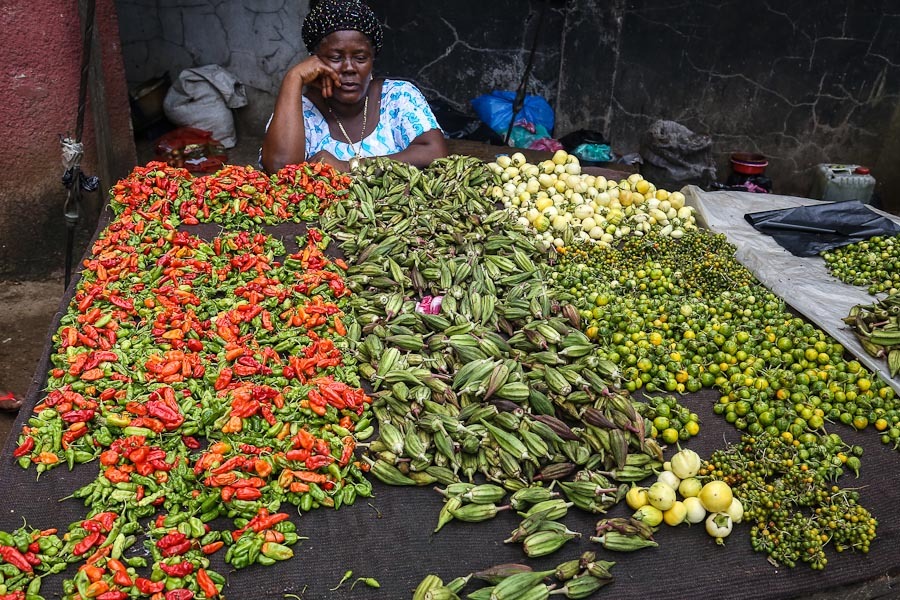
Look beneath the 5.1 percent. Mining expanded by 17 percent in 2025. Agriculture grew by 2.6 percent. [2] Yet the draft budget itself describes agriculture and fisheries as the anchor for rural livelihoods, at 27.4 percent of real GDP. [4]
The sector that carries the most households grew at less than a sixth of the pace of the sector that carries the headlines. Mining earns foreign exchange and tax revenue. On its own, it does not employ a country.
The IMF’s figures make the point more sharply. Nominal non-mining GDP per person was US$704 in 2024 and US$699 in 2025; the fourth review projects US$697 for 2026. [3] Set the mines aside, and the economy’s output per Liberian has barely moved.
Georgia Wallen, the World Bank Group’s Country Manager for Liberia, framed the task at the launch of the Bank’s latest economic update: “The key challenge now is translating growth into opportunities and improvements in people’s lives.” [2]
The ‘dig-a-hole-and-cover-it’ question
The phrase needs care. Here it is an editorial metaphor, not an allegation. It describes spending that recurs year after year without leaving a lasting productive asset: the road patched every rainy season, the programme relaunched every budget cycle, the recurrent bill that grows while its results stay hard to see. It does not suggest that money has been stolen or misused, and Today’s Liberia makes no such claim.
The draft budget shows why the question is fair. Compensation of employees is US$369.40 million, about a quarter of the envelope. The Public Sector Investment Program — the capital budget — is US$328.49 million, or 21.3 percent, across 194 projects. [4]
Agriculture is allocated US$18.40 million, or 1.2 percent of the draft. Industry and Commerce receives US$24.60 million, or 1.6 percent. [4]
Recurrent spending is not wasteful by definition. Teachers, nurses, police officers and soldiers must be paid. But when the lines for farming and enterprise are this thin, the burden of transformation falls on whether capital projects are chosen, built and maintained well.
The IMF is direct on that point: enhancing the selection, implementation and monitoring of capital projects “will be essential to raising the quality of public spending and boosting growth potential.” [3]
Six questions the budget must answer
GOVERNMENT REVENUE vs HOUSEHOLD PROSPERITY
What the state can show
The fiscal ledger
What reaches the economy most people live in
The household signals
- US$704 → US$699
- Nominal non-mining GDP per person (US$697 projected for 2026)2024 → 2025 actual [3]
- 17.7% of GDP
- Credit to the private sector (17.8% in 2024)2025 actual [3]
- +2.6%
- Agriculture growth — the anchor of rural livelihoods2025 actual [2]
- 4.0% → 6.9%
- End-of-period inflation2025 actual → 2026 projection [3]
No household income, wage or employment figure is shown: none was published in these sources. Non-mining GDP per person is an economy-wide average, not household income.
Agriculture. With sector growth at 2.6 percent in 2025 and a 1.2 percent draft allocation, how will the planned mechanisation hubs raise rice, cassava and vegetable output in ways farmers can measure? [2] [4]
Processing. ARREST promises import substitution through industrialisation. [1] Which products imported today will be processed in Liberia by 2029 — and who will finance the plants?
Jobs and SMEs. Credit to the private sector was 17.7 percent of GDP in 2025, and the IMF projects the same ratio for 2026. [3] How will the proposed Small Business Empowerment Initiative reach firms that banks still decline to finance? [4]
Energy. The plan names affordable electricity as a cost of doing business. [1] The draft allocates US$75.23 million, or 4.9 percent, to energy and environment. [4] What will power cost a Monrovia workshop or a county cold store by the end of 2027?
Expenditure quality. Which PSIP projects will be completed, audited and publicly reported — and what measurable change in output or cost will each one deliver?
Fiscal outcomes. Revenue is rising. Will the gains fund productive assets, or be absorbed by recurring costs that must be met again next year?
The verdict
Liberia under President Boakai is not in freefall, and its economic policy is not laissez-faire. The credible criticism is narrower, and more serious: the government has stabilised the public finances faster than it has transformed the productive economy.
That stabilisation is a real achievement. Revenue discipline, a narrower deficit and completed IMF reviews give the state room to act. The draft FY2027 budget, still awaiting legislative approval, is the moment to show what that room is for.
Stabilisation buys time. It does not buy transformation.
The TL scorecard
Today’s Liberia proposes five measures for judging the next twelve months. Each can be checked against official data; none requires a promise to be taken on trust.
- Domestic output. Agriculture and manufacturing growth that consistently outpaces population growth — not mining alone.
- Job creation. Published counts of formal and informal jobs linked to ARREST and PSIP projects.
- SME credit. A rising ratio of private-sector credit to GDP, with lending to small firms reported separately.
- Electricity and logistics costs. Lower, published tariffs and transport costs for businesses moving goods from farm to market and port.
- Household purchasing power. Inflation held in single digits while non-mining output per person rises in real terms. End-2025 inflation was 4.0 percent; the IMF projects 6.9 percent for end-2026. [3]
Until those measures move, one line is worth keeping in view:
A growing government budget is not necessarily a growing household economy.
Sources and methodology
This is an editorial: the judgments, questions and scorecard are those of Today’s Liberia. Figures are taken from the official sources below as published. 2025 figures are reported outturns; 2026 figures are projections; FY2027 figures come from a draft budget that has not been approved. Non-mining GDP per person is an economy-wide average, not a measure of household income; no household income, wage or employment series is presented because none was published in these sources. Photographs are archival and illustrative; none shows 2026 conditions or any transaction discussed here.
- [1] United Nations Liberia — ARREST Agenda for Inclusive Development 2025–2029
- [2] World Bank — Liberia’s Economy Grows 5.1 Percent, but More and Better Jobs Are Needed to Reduce Poverty (press release, November 3, 2026)
- [3] IMF — Press Release No. 26/339, Fourth Review under the ECF and First Review under the RSF for Liberia (October 14, 2026)
- [4] Ministry of Finance and Development Planning — Draft National Budget FY2027 (draft budget book, November 2026)