










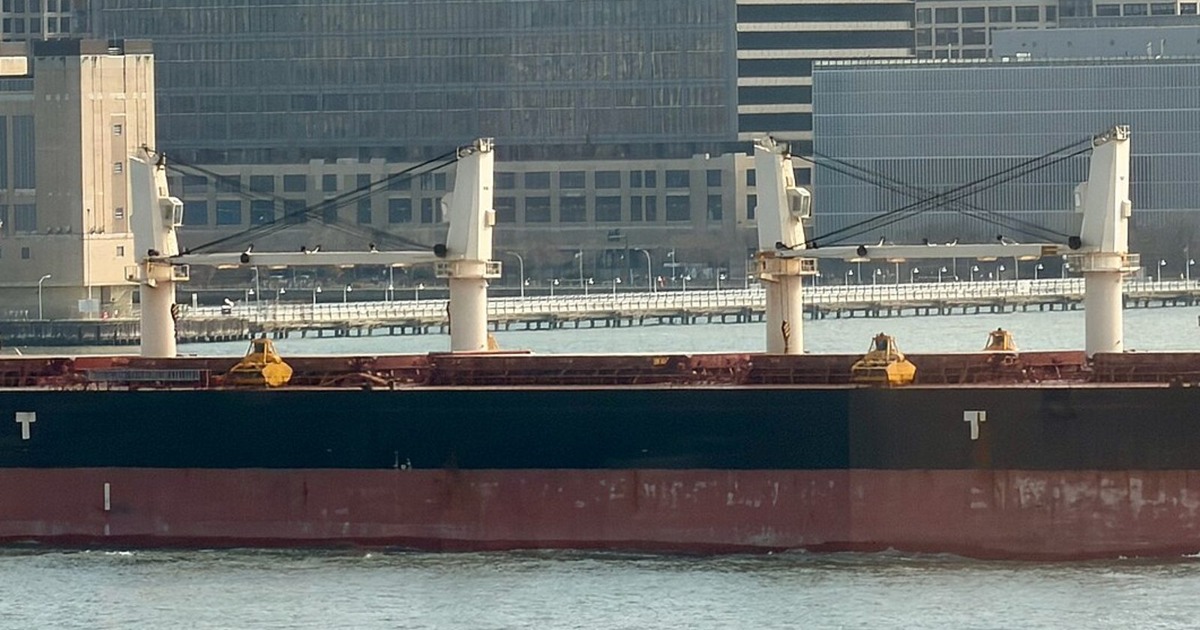
Liberia should commission an independent shipment-to-tax audit of ArcelorMittal’s operations. The objective should be clear: establish whether the iron ore exported from Liberia, the sales recorded against those shipments, the taxes and royalties assessed, and the money received by government reconcile.
That demand rests on documented reporting weaknesses. It does not require a premature conclusion that ArcelorMittal concealed revenue or that public officials diverted funds. It requires recognition that significant transactions involving national resources must be traceable, correctly classified, and independently verifiable.
Liberians deserve an accounting that explains both what the country received and how those receipts were calculated.
The reporting gaps deserve answers
Liberia’s Extractive Industries Transparency Initiative reporting provides concrete grounds for closer scrutiny.
In the LEITI reconciliation covering 2021/22, approximately US$33.22 million required an adjustment because payments associated with ArcelorMittal Liberia had been recorded under ArcelorMittal Holdings’ separate taxpayer identification number and were initially excluded from the LRA’s reported payments. The adjustment was supported by LRA confirmation and company receipts. This was a substantial reporting omission subsequently corrected through reconciliation; it was not a finding that the money had disappeared. [1]
The FY2023 report identified another weakness: US$17.5 million deposited into the Consolidated Account could not be assigned to a specific tax category. LRA indicated that the payments might relate to a settlement, but the supporting documentation did not explain the particulars, and the company supplied no additional details sufficient to resolve the classification. [2]
These findings raise different questions. One concerns matching payments across related legal entities. The other concerns identifying what an acknowledged payment actually settled.
Neither finding independently proves understated sales or deliberate interference. Together, however, they support a demand for stronger controls and a more complete public explanation.
Two findings, distinct limits
| Report / amount | Documented finding | What it does not establish |
|---|---|---|
| FY2021/22 Approximately US$33.22 million [1] LEITI | Payments under a related entity’s taxpayer identification number were initially omitted from LRA reporting, then corrected using LRA confirmation and company receipts. | A corrected reporting omission—not a finding that money disappeared. |
| FY2023 US$17.5 million [2] LEITI | Acknowledged deposits into the Consolidated Account could not be assigned to a specific tax category; settlement particulars remained unexplained. | An unresolved classification—not proof of understated sales or deliberate interference. |
Tax receipts alone cannot establish company revenue
The debate must distinguish export value, company sales, taxable profit, and government receipts.
A shipment’s value is not automatically its taxable profit. Production, processing, transportation, financing, and other costs may affect the calculation, subject to the governing agreement and applicable law. Equally, a tax payment does not reveal the company’s total sales.
Multiplying estimated production by a headline international iron ore price can produce a rough scenario. It cannot substitute for an audit. Ore quality, moisture, shipment timing, freight terms, contractual pricing, and inventory movements can materially affect the comparison.
The question is therefore more precise than whether Liberia’s iron ore is valuable. It is whether each material transaction was accurately measured, appropriately valued, correctly assessed, and fully accounted for.
Follow the ore, then follow the money
A credible audit should begin with the physical shipment.
Independent specialists should reconcile production and stockpile records with rail movements, port loading records, vessel manifests, customs declarations, and buyer documentation. Differences between production and exports should be explained through verified inventory and operational records.
Next, the audit should match shipments to sales invoices and receipts. It should examine realized prices against suitable market benchmarks, with documented adjustments for product quality and delivery terms.
Transactions with affiliated companies deserve particular attention. Related party sales do not, by themselves, establish misconduct. They do require examination of whether prices and charges reflect defensible commercial terms and the applicable legal requirements.
The third stage should reconstruct government obligations. Auditors should review royalties, corporate income tax, withholding obligations, exemptions, deductions, loss carryforwards, and any settlements against the agreement and rules applicable to each period.
Finally, every assessed obligation should be matched to payment records, bank confirmations, treasury entries, taxpayer identification numbers, and the correct revenue category. Any difference should have an identified cause and a documented resolution.
Independence must be built into the assignment
The audit’s credibility will depend on its mandate and access to evidence.
Liberia should select auditors through a transparent process, require conflict disclosures, and assemble expertise in mining measurement, commodity pricing, taxation, and forensic accounting. The assignment should cover the relevant operating and holding entities so that transactions do not fall between separate reporting systems.
The audit period should encompass the years in which documented discrepancies arose and extend through the most recent complete financial year for which records are available.
Its terms should establish a public reporting deadline. The final publication should disclose material findings, adjustments, unresolved differences, and corrective actions while protecting legitimately confidential information.
ArcelorMittal and the relevant government agencies should have an opportunity to respond to factual findings before publication. Their responses should accompany the report where material disagreements remain.
Accountability should lead to correction
Different findings require different remedies.
Administrative errors require corrected records and stronger reporting systems. Unsupported pricing or deductions require the appropriate technical review and assessment. Unpaid obligations require lawful recovery. Evidence of intentional wrongdoing requires referral to the competent authorities.
The outcome should follow the evidence.
Liberia should also use the exercise to establish a recurring reconciliation system linking shipment records, sales declarations, assessments, and receipts. Each material export should have a traceable reference that allows authorized oversight bodies to follow it through the revenue chain.
The public interest is a verified answer
A transparent audit would serve Liberia, responsible investors, and ArcelorMittal itself. It could establish compliance, identify weaknesses, resolve disputed figures, or reveal obligations requiring correction.
What it should end is the dependence on incomplete records and competing assertions.
Today’s Liberia™ calls for an independent shipment-to-tax audit with published terms, a defined timetable, and a public account of the findings.
The standard is straightforward: Liberia should be able to explain what left its shores, what it sold for, what was legally owed, and what reached the treasury.